By Dennis Rizzo & John Elliott
Throughout my career helping organizations identify and place exceptional leaders, I’ve observed something that often surprises boards, CEOs, and executive teams: hiring the right leader does not automatically guarantee success.
In fact, some of the most talented executives I’ve worked with have entered organizations with clear mandates, strong credentials, and tremendous potential—only to struggle with execution after they arrive.
The reason is simple. Leadership success is rarely determined by talent alone.
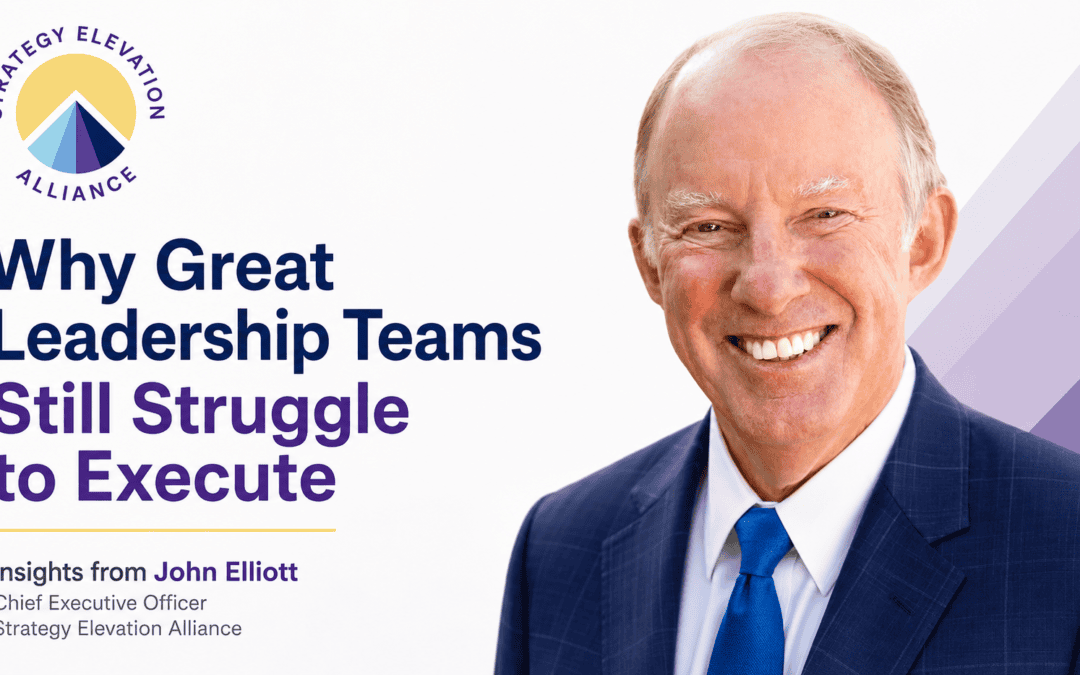
Recently, I sat down with John Elliott of Strategy Elevation Alliance, a Certified Master in The Leadership Challenge specializing in leadership development and coaching, to discuss one of the most common challenges organizations face today: the gap between strategy and execution.
According to John, organizations often underestimate two critical factors.
Culture Drives Performance
The first is culture.
As John puts it, “Culture eats strategy for breakfast.” Leaders need clarity around organizational vision, values, and expectations. They also need alignment between their personal values and the culture they are entering. Even highly capable executives can struggle while building trust and credibility within a new environment.
John often reminds leaders that culture is not simply a collection of policies or statements on a wall. Culture is reflected in daily behaviors, decisions, and conversations. It shapes how people respond to change, how teams collaborate, and how organizations execute strategy.
Alignment Is More Than Agreement
The second factor is alignment.
Organizations frequently believe their leadership teams are aligned because everyone agrees during meetings. Yet the results often tell a different story.
John points to several early warning signs:
- Silence during leadership discussions
- Conversations happening after the meeting instead of inside the meeting
- Lack of trust among leaders
- Key performance metrics consistently falling short of expectations
When these behaviors appear, they often signal deeper alignment issues that eventually impact execution.
True alignment exists when leaders share a common understanding of priorities, openly challenge one another in productive ways, and remain committed to decisions after they leave the room.
Accelerating Time-to-Value
One of the concepts John discusses frequently is “time-to-value”—the speed at which leaders and teams begin producing meaningful results.
For CEOs, Tribal Councils, and Boards, accelerating time-to-value means ensuring leaders have the capabilities, support, and organizational clarity necessary to execute effectively.
John believes successful organizations create alignment around five essential capabilities:
- Strategic Intent
- Leadership
- Metrics
- Structure and Activities
- Market Discipline
When these capabilities are clear and consistently reinforced, organizations dramatically improve their ability to execute strategy.
Why Executive Transitions Fail
Executive transitions create opportunity, but they also create risk.
Many organizations focus heavily on recruiting the right person while paying far less attention to the environment that leader is entering.
John believes successful transitions require:
- The right people in the right seats
- Leadership development and coaching
- Strategic alignment across the organization
- Clear values and vision
- Accountability frameworks that support execution
As he often reminds leaders, there is no culturally neutral behavior.
When a new executive arrives, employees immediately begin asking three questions:
- Who are they?
- What do they believe?
- Where are we going?
The answers to those questions determine how quickly trust, alignment, and momentum develop.
Accountability Without Bureaucracy
One of the most common mistakes organizations make is confusing accountability with additional meetings, reports, and layers of process.
John recommends a different approach.
Effective accountability starts with clearly defined values, measurable goals, decision-making clarity, and continuous improvement.
Organizations that excel at execution typically have:
- Accountability embedded in their values and language
- Clear goal-setting and measurement systems
- Defined decision-making frameworks
- Continuous improvement disciplines
The objective is not more bureaucracy. The objective is greater clarity.
Leadership in a Changing World
Looking ahead, John believes gaming, hospitality, and tribal enterprises will face increasing complexity driven by market maturity, technological disruption, and the rapid advancement of artificial intelligence.
Yet despite those changes, he believes the fundamentals of leadership remain unchanged.
Organizations that invest in leadership development, challenge existing assumptions, embrace change, and build resilient cultures will be best positioned to succeed.
His advice to leaders navigating uncertainty is both simple and powerful:
“Do not be afraid to put yourself in uncomfortable positions to learn and grow. Take small risks. Failure is not fatal. Concentrate on leadership development and remember that leadership is an affair of the heart.”
That statement may be the most important lesson of all.
In an era increasingly defined by technology, data, and disruption, leadership remains deeply human. It is built on trust, character, empathy, courage, and service to others. Great leaders do more than create strategies—they inspire belief, build alignment, and help people achieve outcomes they could not accomplish alone.
Because while strategy may define the destination, leadership, alignment, and culture ultimately determine whether organizations arrive there. And as John Elliott reminds us, leadership is ultimately an affair of the heart.






Excellent insights, John and Dennis. In my experience, organizations rarely fail because they lack strategy, they fail because they overestimate alignment.
Silence in meetings, side conversations, and missed metrics are symptoms of a deeper execution issue.
The organizations that consistently outperform are those that create clear line-of-sight between strategic intent, leadership expectations, measurable outcomes, and accountability.
Strategy may set the destination, but execution determines whether you ever arrive.